
?Bank: Market Risk, Efficiency and Financial Crisis in Asia-Pasific Region
- Regular price
- RM 25.00
- Sale price
- RM 25.00
- Regular price
-
RM 0.00



Share
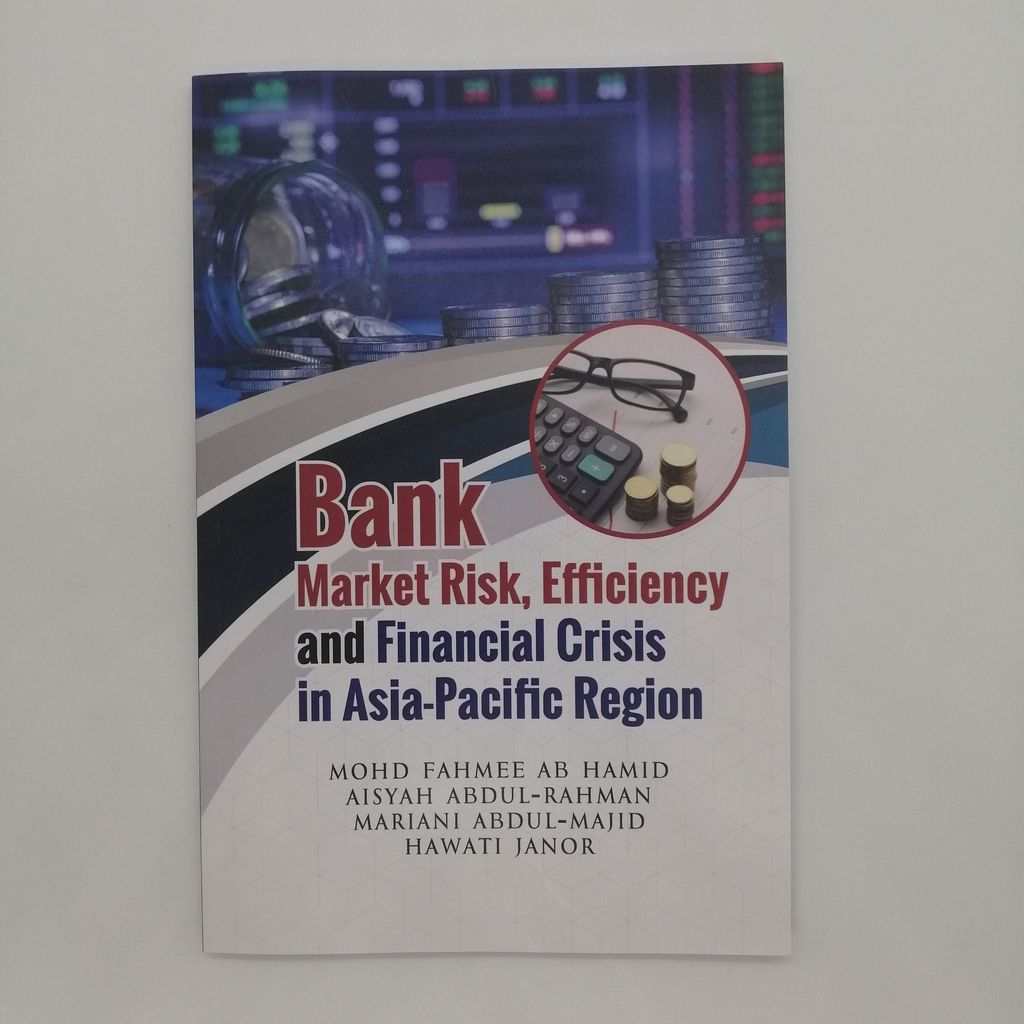
Bank: Market Risk, Efficiency and Financial Crisis in Asia-Pacific Region
Author: Mohd Fahmee Ab Hamid, Aisyay Abdul-Rahman, Mariani Abdul-Majid & Hawati Janor
Publisher: UKM Press
ISBN: 9789672429982
Weight:
Page: 106
Year: 2021
Price: RM25
The main business of banks is to manage risks in return for the charges paid by the customers. Over the past three decades, banks have provided a broad range of innovative financial instruments to manage risk. The innovative instrument is engineered by transferring credit risk products to the capital markets products. These newly engineered market products complicate the existing market structure thus increasing the market risk exposure. When the market risk is not properly managed, it will reduce the earnings or valuation of the banks resulting in a capital loss. The improvement in banks' capital from efficiency enables banks to absorb more risk, create higher safety, and strengthen the banking industry. This book examines the market risk and the effect of efficiencies on market risk. Using panel data, this book constructed models to examine the relationship between market risk, efficiencies, and bank independent variables.
The bank market risk is measured using Value at Risk (VaR) and Expected Shortfall (ES) methods. The cost and profit efficiencies are estimated using Stochastic Frontier Analysis (354) EWS is calculated using the logit model, and accounting ratios are used for other bank Independent variables. The data consists of 116 listed banks in 15 countries in the Asia-Pacific region from 1988 until 2015. The countries are also grouped into three categories based on their economic development level. The results from panel data regression show that increases in the cost and profit efficiencies increase the bank market risk for all models. The results indicate that there are differences between the cost and profit efficiencies model with VaR and ES methods. These results could be used as a basis for formulating a proactive policy by banking supervisors or as input to the business strategy for the banking managers.