

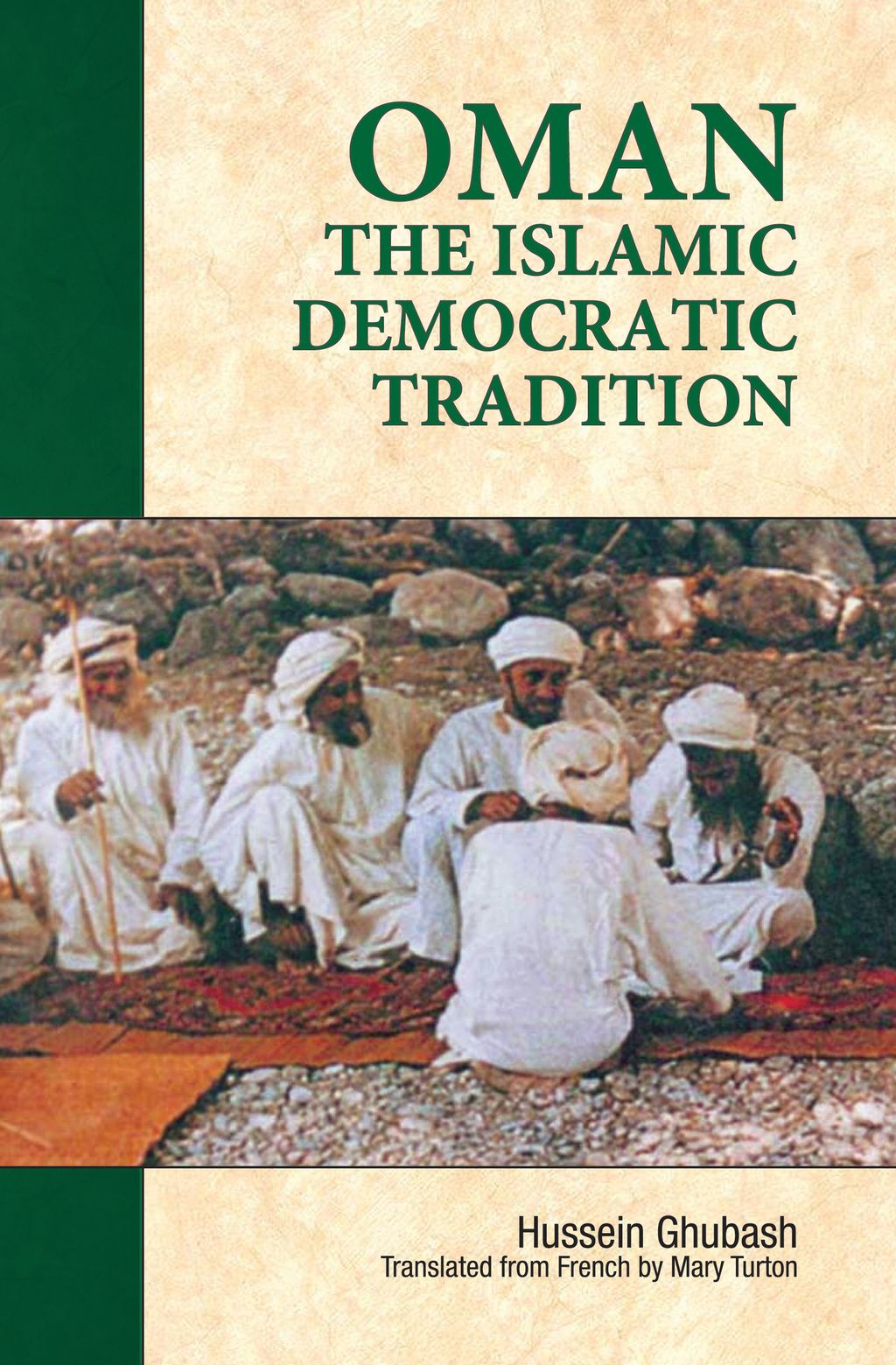
Oman: The Islamic Democratic Tradition
- Regular price
- RM 45.00
- Sale price
- RM 45.00
- Regular price
-
RM 0.00



Share
Oman: The Islamic Democratic Tradition
Author: Hussein Ghubash
Publisher: Islamic Books Trust
ISBN: 9789670957357
Weight: 0.250kg
Year: 2020
Page: 252pp
Price: RM45
There are some good books about Oman by Western historians, but there has been nothing at all in English written from an Arab perspective. Hussein Ghubash has started to put this deficit right. While Oman – The Islamic Democratic Tradition is firmly rooted in Western scholarship, Ghubash casts a refreshing light on his subject, reflecting that he himself is genuinely local to the Lower Gulf.
Ghubash begins with the early history of Ib??ism, recognizing as central the principles of sh?r? (consultation), the free election of the imam, and al-ijm?‘ wa-l-ta‘?qud (consensus and contract). Since the first imamate, Omani society has been founded on these principles. Ghubash moves on quickly to make the engagingly bold claim that Oman’s Ib??i imamate, roughly from the eighth to the eighteenth centuries, may be considered ‘the longest democratic experience in the history of mankind’.
In this sense, democracy is and has been visible in Oman in many ways. For one, the impulse to consult, which is plainly more democratic than crude Western winner-takes-all politics, is deeply ingrained.
Ghubash covers the ground in every sense. His narrative of the early history, from the Portuguese period to the B?-Sa‘?d dynasty, as well as the colonial challenge, is uniformly strong. At the same time, he has a deep insight into the ethical and theological basis of Ib??ism and Omani identity.
But the book is by no means an easy read, covering a broad range of philosophical and theological territory, always with the author’s own distinctive tone and perspective. This should make it all the more intriguing to a broad readership across the social sciences and historical studies. From one perspective, it engages with Middle East studies, and from another, with Islamic Studies; indeed, this holistic approach has great charm. Of its many strengths is its repositioning of the story of the West’s engagement with Oman to where it belongs. It is a valuable experience for Western experts to be quiet for a moment and hear the story told from another frame of reference.