
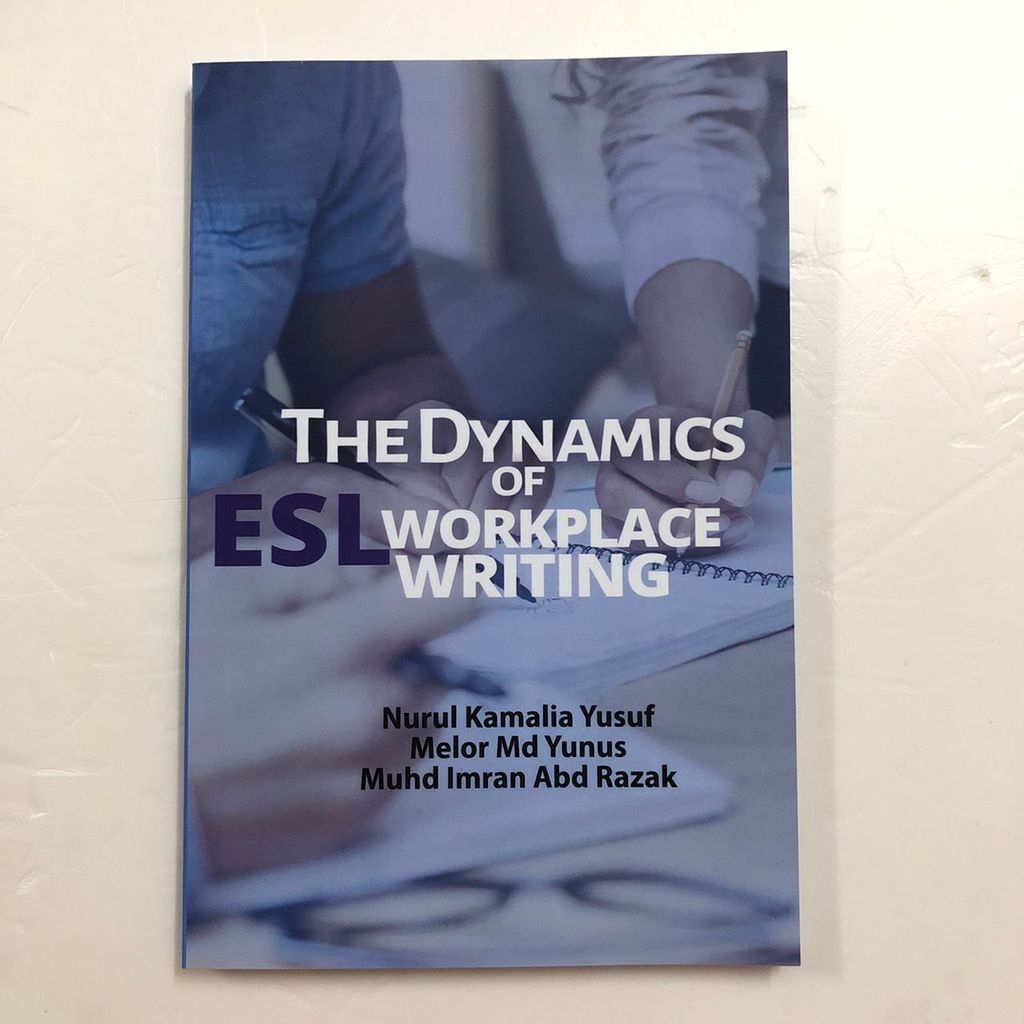
The Dynamics of ESL Workplace Writing
- Regular price
- RM 25.00
- Sale price
- RM 25.00
- Regular price
-
RM 0.00



Share
The Dynamics of ESL Workplace Writing
Author: Nur Kamalia Yusuf, Melor Md Yunus & Muhd Imran Abd Razak
Publisher: UKM Press
ISBN: 9789672514176
Weight: 0.194 kg
Pages: 122
Year: 2021
Price: RM 25
The Dynamics of ESL Workplace Writing laid the essence in understanding the actual workplace writing practices within the scope of 12 writing theories and the generational theories to understand the nature of workplace writing. In this book, the millennial generation workforce was chosen as the subject of the investigation. The findings have proven the contribution of the theories in understanding the nuances of ESL workplace writing in this context. The book also presents the theoretical contribution of the study to the literature on workplace writing and the millennial generation, which is threefold. The book highlighted (1) the understanding of the dynamic interrelations between the backgrounds of writers and readers (audiences) and workplace writing practices, (2) knowledge concerning the millennials at the workplace, and (3) the understanding of situated and complex workplace writing about genres and transitions into workplace genres that writers make.
This book is also essential as it offers an abridged theoretical understanding for ESL and ESP instructors concerning writing for professional purposes. Firstly, the awareness of workplace writing's complex nature may facilitate reflective practice and ESL learning, especially for employment. There were countless arguments on conventions and grammar when it comes to teaching writing in ESL. Second language writing proponents are divided into two schools of thought when discussing the patterns and grammar in writing instructions. One contended that grammar should be isolated from writing, and the other maintained that grammar should be taught in a writing context. This book proposed that academics induce conventions in a proper place in teaching writing, Linguistic aspects should not be separated from a context as learners prefer authentic or relatable tasks. Thus, linguistic aspects should situate in a real workplace context. Moreover, an awareness of the workplace's overlapping community of practice (COP) resulting from various ideologies (multi-disciplinary backgrounds) is crucial.