
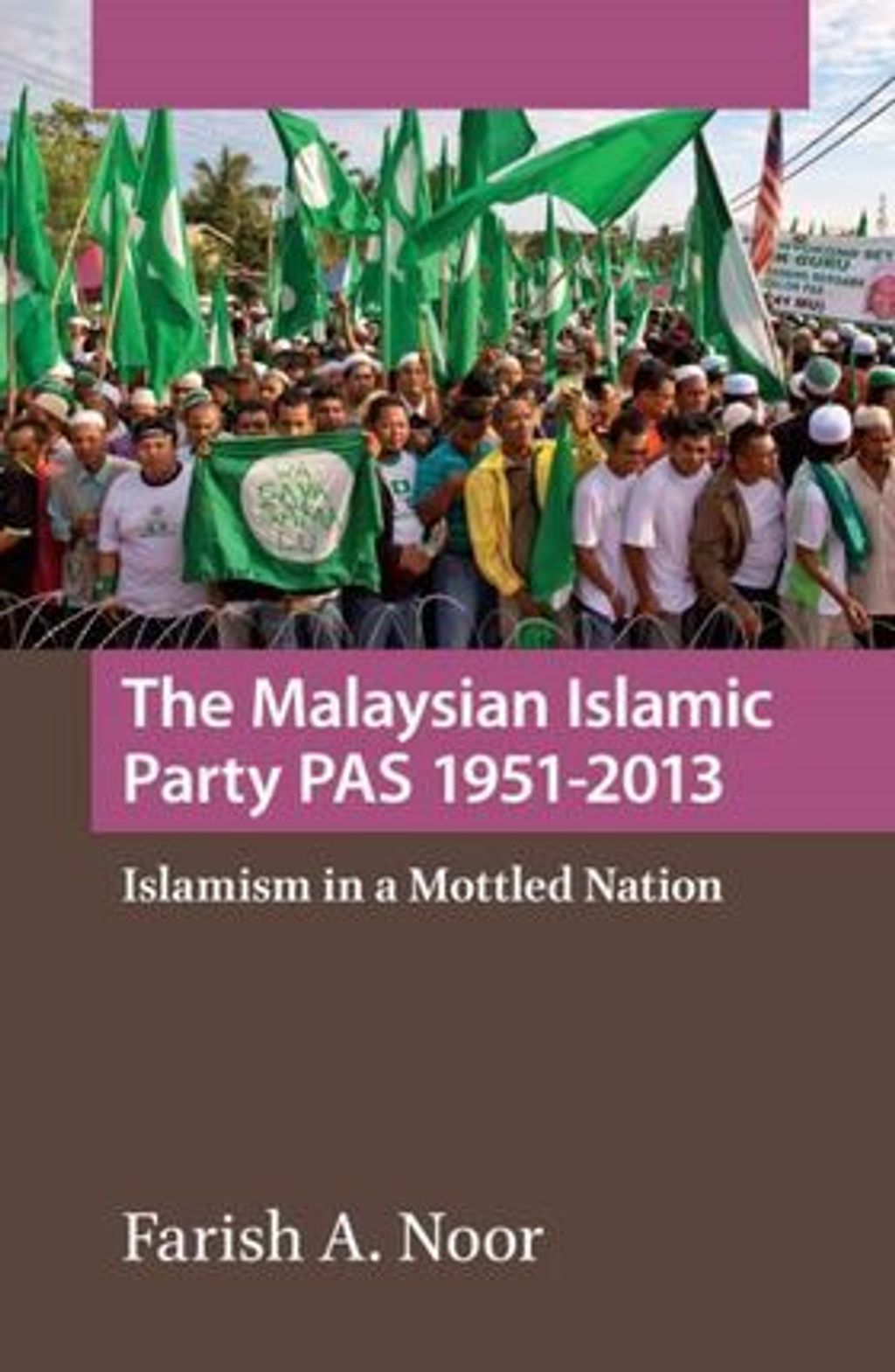
The Malaysian Islamic Party PAS 1951-2013: Islamism In The Mottled Nation
- Regular price
- RM 40.00
- Sale price
- RM 40.00
- Regular price
-
RM 0.00



Share
Author: Farish A. Noor
Publisher: SIRD
ISBN: 9789670960173
Pages: 260pp
Year: 2016
Weight: 0.4kg
Price : RM 40.00
Farish A. Noor is Associate Professor at the S. Rajaratnam School of International Studies (RSIS), Nanyang Technological University, and the head of its Contemporary Religion in Southeast Asia Program.
This masterful work on how ‘political Islam’ has transformed Malaysian politics is now one of the essential books about contemporary Islamist politics.— Clive Kessler, The University of New South Wales
This book should top any required reading list on Islamist politics and social activism among students, decision-makers, and the general public alike. — Joseph Chinyong Liow, S Rajaratnam School of International Studies and Nanyang Technological University
This is the best study of PAS that has appeared to date, and Farish’s richly documented work relate the shifts in PAS’s counter-hegemonic discourse and practice to the wider political context, both national and international.— Prof Martin van Bruinessen, Utrecht University